
Control Flow in JavaScript: If, Else, and Switch Explained
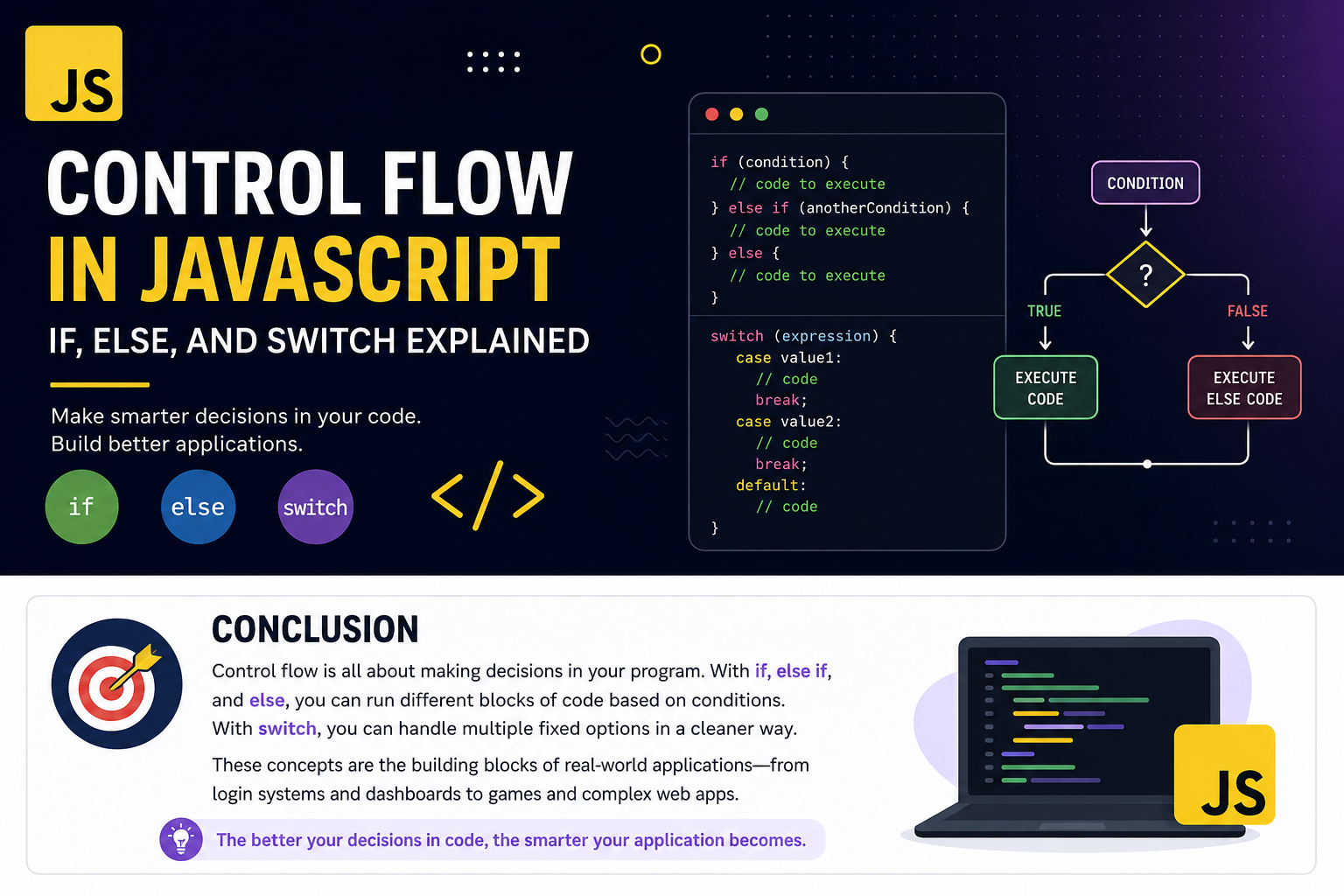
Okay, so programming isn’t just about writing code. It’s about making decisions and about how efficiently your code is written and how well it works.Sometimes we want a program to run a block of code only when a condition is true.
What control flow means in programming :
Control flow determines how our program moves from one line of code to another. In JavaScript, code normally executes from top to bottom.
For example:
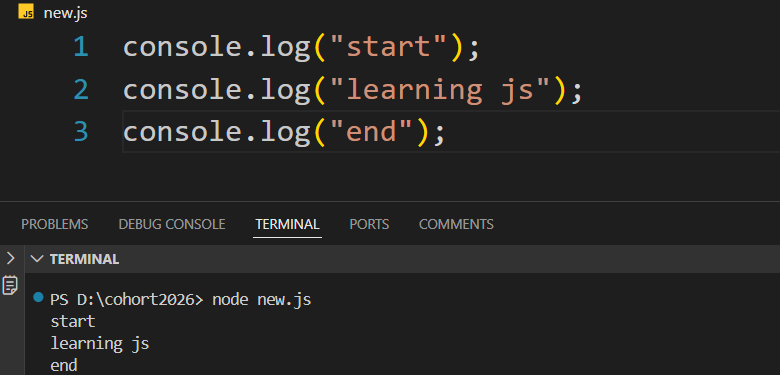
We can see that the code is executed line by line, but in a real-world application we need decisions, so JavaScript provides:
if
else
else if
switch
these help to make the decision.
The if statement :
The if statement runs code only when a condition is true.
For example:
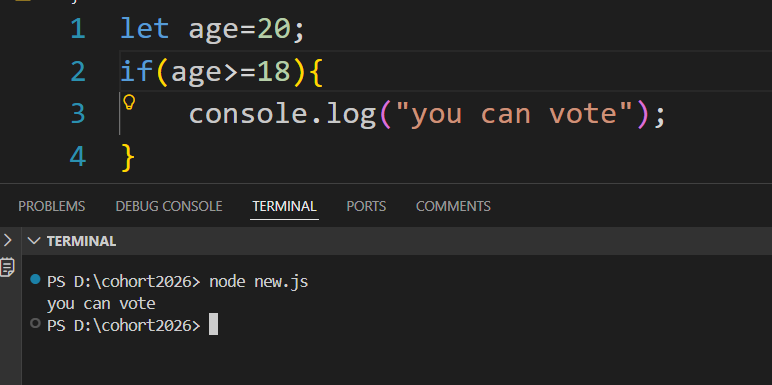
Okay, so the condition inside the if is correct. That is why it prints 'you can boot'. Otherwise it won't print it.
The if-else statement :
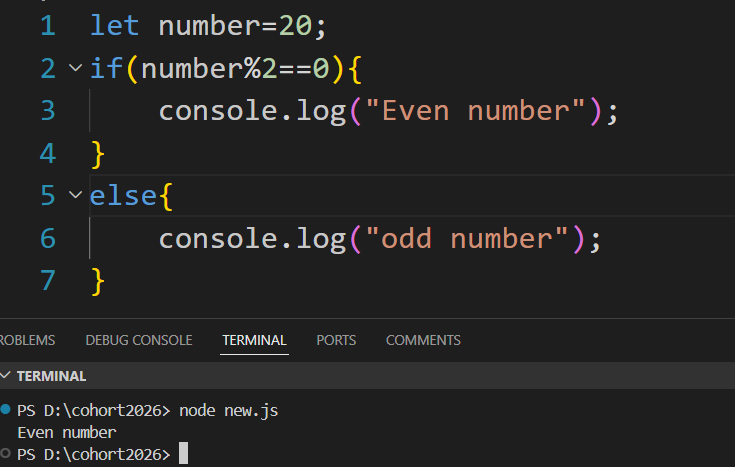
the if-else statement is used when we want one block to run if the condition is true and another block to run if the condition is false.
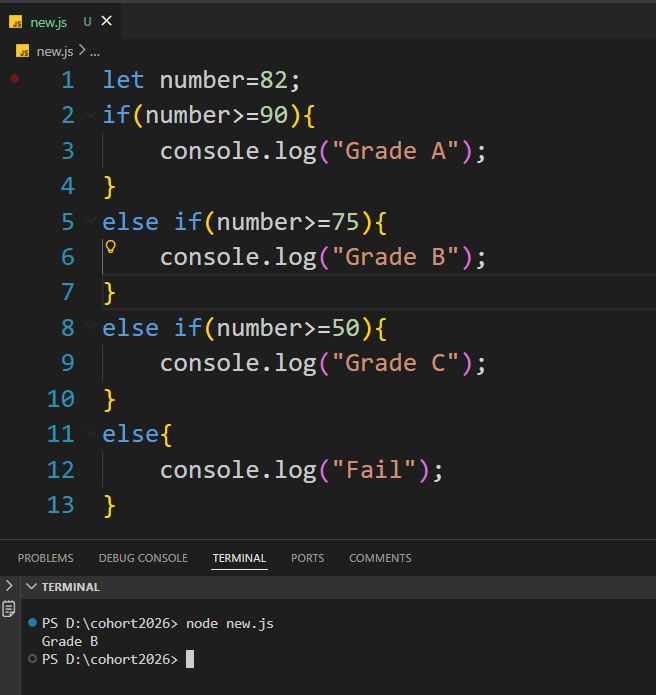
The else if ladder :
Okay, sometimes we need to check multiple conditions in this JavaScript to create an else-if ladder.
Example :
The switch statement :
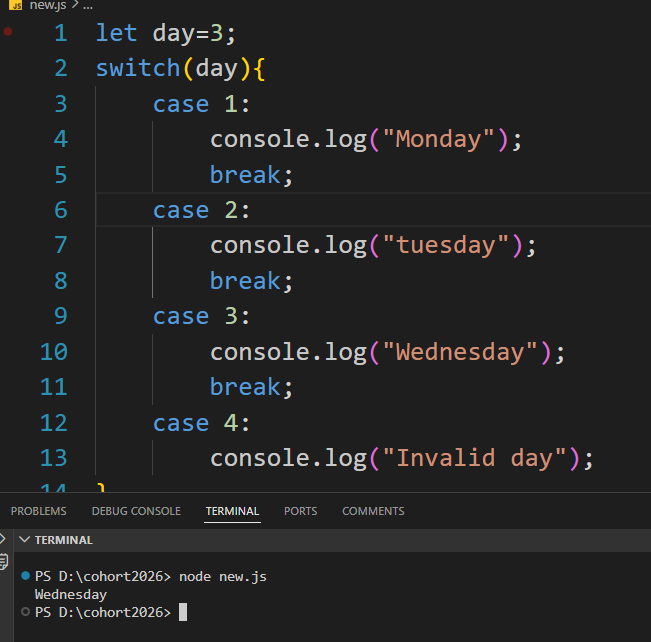
The switch statement is used when we need to compare one value with multiple possible options. It s more cleaner than else if conditions.
When to use switch vs if-else :
Use Switch :
Multiple fixed values.
for readibility
Use if-else :
Complex Conditions
Using logical operators
Comparing ranges.
Conclusion :
Control flow statements are one of the most important parts of JavaScript because they allow programs to make decisions.


